Philosophy of Language is the branch of Philosophy that investigates the relationships between world, thought, and language. The meaning of words has always occupied an important role in philosophical reflections since the earliest thinkers. However, it was only from the 20th century onwards that Philosophy began to consider language as a fundamental philosophical investigation. If before it was secondary, serving as a basis for reflections, from the Contemporary Era onwards it became the main theme.
It is not just about understanding historical, social, and cultural contexts to, from that, investigate the meaning and sense of words. It is also about understanding the limits of language; the attempts to express thoughts and, finally, whether it is the subject that determines language or language that determines the subject.
What intrigues thinkers, far beyond the mere “communication problem” — such as personal, political, and religious conflicts caused by differences in meaning of the same words — is whether language can actually say something about the world and be understood according to the intention of the one trying to communicate.
Does each person possess a particular world that they try futilely to transmit to others? What kind of world is communicated by different types of language, such as poetry, philosophy, religion, science, literature, cinema, and others? Are the thoughts we try to transmit not distorted by the language of the group in which we live? What, then, is the adequate language?
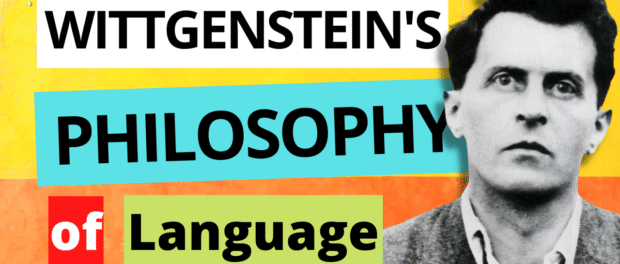
For the Austrian philosopher Wittgenstein — one of the most notable authors of Philosophy of Language — we are merely playing naively language games that function only when inserted in a certain social interpretation of reality, which most probably is not reality itself. Wittgenstein, in his investigation of language, went even further, stating that philosophical problems are, in fact, language problems.
To say that our language does not function outside the linguistic reality in which we live is not merely to state the obvious, but rather to say that the limits of our language are also the limits of our thought.
This idea, much explored in Philosophy of Language, is somewhat in accordance with the observation that writer Aldous Huxley made about linguistic traditions in his famous book The Doors of Perception:
“Each individual is at once beneficiary and victim of the linguistic tradition into which he has been born — beneficiary, insofar as language gives him access to the accumulated record of other people’s experience, and victim, insofar as language confirms his belief that reduced awareness is the only awareness, confusing his sense of reality.”
Wittgenstein’s philosophy of language is divided into two phases. The first, influenced by his master Bertrand Russell and marked by the investigation of the logical limits of language, exposed in his work Tractatus Logico-Philosophicus. And the second, in which the philosopher disagrees with his first phase and creates the concept of language games in his work Philosophical Investigations. These phases are known as “early Wittgenstein” and “later Wittgenstein.”
Logic, World and Language
The idea that philosophy’s problems carry language problems is not something new. Philosophers Leibniz and Spinoza already perceived the confusion in the use of words. And before them, Plato, Aristotle, and medieval philosophers (through the Problem of Universals) also investigated this problem.
However, the so-called “linguistic turn” of philosophy occurred only from the 20th century onwards, when some philosophers turned to the attempt to establish a formal logical system that would portray the reality of the world in a precise and rational way. This movement, represented mainly by Wittgenstein, Bertrand Russell, and Frege, became known as Analytic Philosophy.
One of the main characteristics of language — according to Wittgenstein in his first phase — is that, on one side, we have the world with its multiplicity of facts, and on the other, a language that tries to speak about this world. Thus, there necessarily exists something in common between the world and language: the logical form. Consequently, sentences from common language can be rewritten in logical propositions to be analyzed. From this, the falsity or veracity of what was said is verified.
However, for Wittgenstein, we can only consider propositions that mirror the facts of the world, such as saying that “the vase is on the table.” This is in accordance with this philosopher’s picture theory, which states that each name in a proposition must have a reference in reality, that is, our language must picture something in the world. Anything different from this, such as talking about names that cannot be pointed to, means saying things without sense. About this, Wittgenstein states:
“To represent in language something that contradicts logical laws is as impossible as representing a figure that contradicts the laws of space.”
However, for the early Wittgenstein, things that cannot be said do not mean they do not exist, but rather that any discourse about them is not possible. This would encompass, for example, religious, ethical, or mystical discourses. In this way, language is limited to what is factual, as occurs with biology, chemistry, and physics. To speak about “things that cannot be said” means to speak things without sense.
The possibility of the existence of incommunicable interior experiences is a characteristic of the “early Wittgenstein’s” thought, which, as was said, does not deny the existence of these experiences, but categorically states that about them, nothing can be said, because the fact that language has its logical foundations in material reality is what determines its limits. This is the basis of this philosopher’s most well-known declarations:
“What can be said at all can be said clearly; and what we cannot speak about we must pass over in silence.”
“Whereof one cannot speak, thereof one must be silent.”
As we will see next, Wittgenstein will later criticize his first phase, stating that he was mistaken in believing that language possesses only one possible logic, developing the idea that there is not just one language, but various types of language with their own logics, abandoning the rigidity of formal logic. This attitude made him an example of intellectual honesty in philosophy, as he did not mind criticizing himself and modifying his ideas.
Context, Thought and Language Games
From everyday experience, we know that most people do not care about linguistic issues, living according to their local beliefs and speaking about them spontaneously. However, when individuals take their discourses to a different scenario — whether social, cultural, or religious — they can no longer communicate efficiently. This fact has more complex consequences than the mere communication problem, as it also deals with the limitation of thought itself.
The concept of language games, developed by Wittgenstein in his second phase, became one of the most well-known illustrations of this problem. To say that we communicate as occurs with games means to say that there are various languages governed by their own contextualized rules.
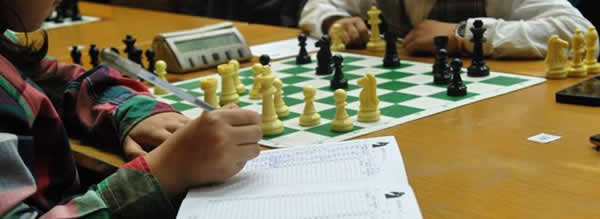
In a chess game, for example, players agree with the established rules. But if one of the players wants to radically disagree with the rules, there is no longer a chess game. One can even create a new game with new rules using the same pieces and the same board. However, it will definitely no longer be chess, as it ceases to exist if we do not use the rules established for it.
The same occurs if someone asks us: “how is a ball used?” Our answer will depend on the games we will use as examples, such as soccer, volleyball, or basketball. Or even some game invented on the spot. The same occurs with words, as they would not have universal meaning, but rather a use we make of them within the rules of a language game.
If I use the word “saint,” I can refer to some biblical character or speak of someone I consider good. But I can also refer to someone I consider hypocritical or even designate some object. Everything depends on the use I intend to make of this word within a certain context; the word itself has no meaning if it is not delimited by some linguistic practice. These examples may seem simple, but if we think about the social and cultural aspects involved, the question assumes great complexity.
For the “later Wittgenstein,” language is a vast quantity of practices, each with its own logic. Not all linguistic practices are argumentative, such as jokes, poetry, cinema, fables, or religions, but rather practices with their own rules. These discourses have meanings and make sense within their contexts. There is not, therefore, one single formal logic for language, as the philosopher supposes in his first phase.
Similarly, social groups play language games that do not make sense outside their rules. These rules also delimit the thinking of the members of these groups, as human thought would be incapable of going beyond language games. An individual can even navigate between various language games, but cannot go beyond the games themselves. About this, Wittgenstein states:
“The limits of my language mean the limits of my world.”
“We imprison ourselves in our own language games.”
Despite delimiting thought, language games have an important function, as they allow members of social groups to communicate and act coherently and efficiently, even though this coherence only makes sense within the rules of each group. Furthermore, the varied linguistic practices reveal something about the realities of human groups, however, as stated previously, many things that are said do not make sense — or even do not exist — outside their language games.
Thus, even philosophy is imprisoned in its own language game and does not transcend its rules. Our thinking, in the same way, does not go beyond the limits of linguistic practices, which makes us incapable of speaking about absolute or universal truths — which has always been one of philosophy’s fundamental objectives. This is why it is said that Wittgenstein, in his first phase, tried to kill philosophy without success. However, in the second attempt, he achieved his objective.
Philosophy of Language: Main Authors
Bertrand Russell
During the 20th century, English philosopher Bertrand Russell (1872-1970) was considered one of the most important intellectuals of his time. His influence is present not only in Philosophy of Language, of which he is considered one of the pioneers, but also in mathematics, logic, literature, and epistemology.
Furthermore, Russell actively campaigned for pacifist and humanitarian causes. For his complete work, which includes the publication of A History of Western Philosophy, he received the Nobel Prize in Literature in 1950.
Initially, Russell was focused on some paradoxes of mathematics and logic. His interest in language, mainly the problems of language in Philosophy, occurred after the philosopher (due to his research in logic) turned to epistemology.
Russell was an empiricist, and for him all information that did not come directly from the senses was subject to confusion. Similarly, language should refer to empirical reality. In Philosophy, Russell believed that we could no longer be so careless with language.
His approach was called logical atomism, since he believes that the world is composed of logical facts that are reflected in language and that can be separated and divided until truth or falsity values are established in a proposition.
Thus, a proposition, to be true, must contain only valid arguments in its constituent “atomic parts.” A falsity value in the proposition means that the entire proposition is false.
For example: the proposition “The current King of France is bald.” When analyzing the first part of the proposition, “The current King of France,” we perceive that it is false, since there is no current King of France. Therefore, it no longer matters to evaluate whether the king is bald or not, since the entire proposition is already false, since one of its constituent parts is invalid.
Applied to a small proposition, it seems simple. But a certain philosophy is formed by various propositions, which are its arguments chained to a conclusion.
So, if we believe in logic and its relationship with language and the world, as Russell states, an entire philosophical system must be considered doubtful if only one of its propositions is false.
Being Bertrand Russell an empiricist, he still advises that when considering any philosophy we should refer only to facts, avoiding considerations distant from reality, as he states in his famous interview for BBC London (watch the video at the link below).
Imagine, for example, that the geocentric system was accepted for more than twelve hundred years taking into consideration that the Sun revolves around the Earth.
This entire system, accepted by thinkers, scientists, and philosophers of the time, was considered invalid by the simple falsity of one of its main premises: the Sun does not revolve around the Earth.
Now imagine that Russell, being a convinced empiricist, believes that we can only consider arguments true that are verifiable clearly and without any doubt for all people.
Consequently, metaphysical or spiritual arguments, as well as philosophical reflections distant from reality — or even arguments that appeal to feelings — are subject to confusion and should not be considered in rigorous philosophy.
The verification of truth and falsity of propositions also involves a formal system called propositional logic, where the constituent atomic parts are converted into symbols and united by logical connectives.
Ludwig Wittgenstein
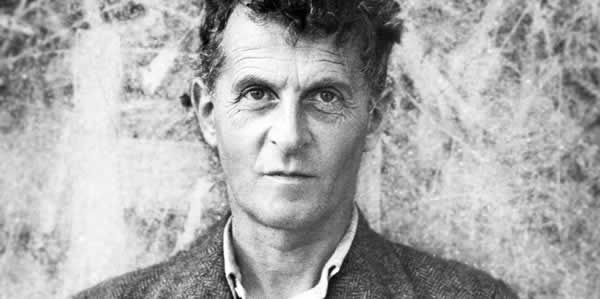
Austrian philosopher Ludwig Wittgenstein (1889-1951) received his first experiences in Philosophy from Bertrand Russell, the only one who had a calm enough temperament to put up with the unbearable and arrogant personality of young Wittgenstein, who is currently recognized as one of the great creative geniuses of the 20th century.
Russell not only tolerated Wittgenstein and patiently taught him everything he knew, but also supported him in every way in his philosophical production, foreseeing that the young genius would be the continuation of his ideas. This great philosophical movement initiated by Russell, Wittgenstein, and others became known as Analytic Philosophy, which has Philosophy of Language among its foundations.
Wittgenstein’s Philosophy is divided into two phases. The first where he exposes part of the ideas he developed with Bertrand Russell, although there are disagreements between them, represented by his work Tractatus Logico-Philosophicus, and the second, where the philosopher will disagree with himself and establish his concept of “Language Games” in his work Philosophical Investigations.
Wittgenstein’s first phase is marked by the investigation of the relationship between world, language, and thought. His philosophy starts from the assumption that there is a parallel between the logical form of language (its syntax) and the world, since language necessarily needs to reflect the totality of the world’s logical facts.
These initial ideas are similar to those of Bertrand Russell, also using logical analysis of propositions with the objective of establishing their truth and falsity values. However, the two philosophers have serious divergences, as Russell gives primacy to empirical experience while Wittgenstein values logic above all (at least in his first phase).
For Wittgenstein, philosophy’s fundamental task would be “a battle against the bewitchment of our intelligence by means of language“, because Philosophy’s problems — as well as a good part of our daily life — are fundamentally problems of language and logic.
Without Philosophy “thoughts are vague and indistinct” and its task would be precisely to “clarify them and give them sharp limits.” And since language is restricted to the limits imposed by the world, we cannot say anything beyond these limits — except meaningless things.
One of the great questions for the Austrian philosopher is that, about subjects that cannot be “shown,” such as God and the soul, nothing can be said. This does not mean that these things do not exist, but only that language, due to its limits, cannot say anything about them. About this Wittgenstein declares enigmatically: “Whereof one cannot speak, thereof one must be silent.”
In his second phase, Wittgenstein begins to treat language as a contextual game with fixed rules, calling into question the pretensions of truth or universality of discourses.
The “Later Wittgenstein,” as his second phase became known, is a surprising demonstration of the philosopher’s intellectual honesty, as he will disagree with several fundamental points of his first work.
In his second work, Philosophical Investigations, the philosopher presents his concept of Language Games, which seeks to demonstrate how language operates like games, being restricted to highly delimited rules of concepts, senses, and meanings.
However, the way people communicate, spontaneously and unconsciously, prevents them from perceiving that they are playing linguistic games. This does not become a problem, as this delimitation and contextualization is a characteristic of human communication, but it also represents a prison (of language and thought) in which philosophical discourses are also imprisoned.
This concept has already been presented above in the introductory section “Language games, context and thought.”
Wittgenstein elevated Philosophy of Language to a level that earned him the fame of “the philosopher who killed Philosophy.” What is said about his two phases is that, if the philosopher was trying to kill Philosophy in his first attempt, he failed, however, the second time he succeeded.
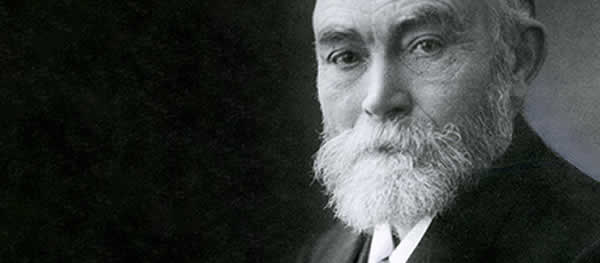
Gottlob Frege
The ideas of German philosopher Gottlob Frege (1848-1925) are fundamental for the development of 20th-century Philosophy, and can even be considered the initial landmark of Analytic Philosophy, definitively influencing Philosophy of Language.
Furthermore, he was responsible for conceptual innovations in the field of logic, mathematics, and epistemology. Perhaps that is why he declared that “every good mathematician has a bit of philosopher and every good philosopher has a bit of mathematician.”
“On Sense and Reference” is his most well-known work, where the philosopher questions the relationship of equality, being considered practically a classic of Philosophy of Language. The article is part of his book Logic and Philosophy of Language.
In this article Frege seeks to point out questions about the changes of sense that occur when we speak about the same reference, such as referring to Aristotle sometimes as Plato’s disciple and sometimes as Alexander the Great’s teacher.
Despite the reference being the same, which is the Greek philosopher Aristotle, the sense (thought or cognitive difference) is different. This ambiguity, which may seem trivial, carries a problem in the relationship of equality, mainly regarding language and logic.
At the beginning of his article Frege says: “Equality gives rise to challenging questions which are not altogether easy to answer. Is it a relation? A relation between objects, or between names or signs of objects?“
Indeed, from the notion of sense and reference, all kinds of questioning arise in common language. As an example Frege says in his article: “The words ‘the celestial body most distant from Earth’ have a sense, but it is very doubtful that they also have a reference.”
In this case, we have a sense without a reference object, which can produce invalid (or doubtful, as Frege states) propositions. In Russell’s example that we saw previously about the proposition “the current king of France is bald” something similar happens.
Similarly, and still using another example from Frege, “The reference of ‘evening star’ and ‘morning star’ is the same, but not the sense.” In this case, the reference is the planet Venus, which observed in the morning has one sense and at dusk has another. So, we have the same object and two senses, and each sense produces a different image in the mind; a different thought or idea.
Frege’s objective was to create an artificial language that would eliminate the ambiguities and problems of common language, thus aspiring to the creation of a rigorous language (which he called conceptual notation) for mathematical, logical, philosophical, and scientific questions.
Independent of the developments of Frege’s ideas — which would require a text that exceeds this post’s introductory proposal — his analytical approach was one of his main influences.
His mathematical perspective may seem similar to Descartes’ philosophy, which sought to bring mathematical rigor to philosophical reflection, however, it is something more specific: the application of mathematical exactness to language.
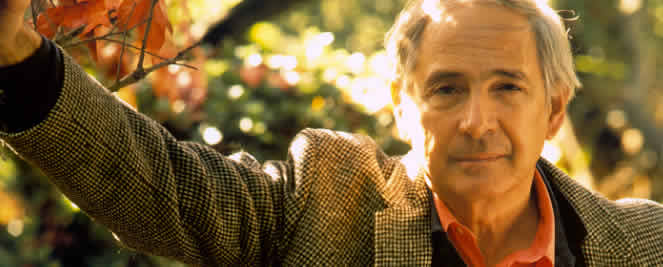
John Searle
John Searle (1932 -) is an American philosopher of the analytical tradition who stood out for emphasizing the relationships between Philosophy of Language and Philosophy of Mind, pointing out this integration as indissociable.
One of the points raised by Searle is that Philosophy of Language, as done by some philosophers, considers that philosophical problems could be resolved only by clarifying the logic and meaning of words.
Openly disagreeing with this perspective, Searle believes that this overly logical point of view disregards that language is also the result of biological characteristics of the mind, therefore, any study about language must consider the way the mind processes reality.
This does not mean that the analytical style should be abandoned, but rather that it should begin to consider new elements, after all, rigor in clarity and logical elucidation of philosophical questions is one of the greatest legacies of Analytic Philosophy.
John Searle received strong influence from Frege, thanks to the objective and clear style, however, he does not intend thereby to merely confirm Frege’s conception, but rather to add problems that were being ignored since then.
According to the American philosopher, among the problems that Philosophy of Language must consider are the problems of the mind-body relationship, consciousness, intentionality, and the way we express ourselves in what Searle called “speech acts”.
Searle also stood out by pointing out errors in scientific conceptions, especially of Artificial Intelligence scientists, showing through a thought experiment why machines will never be capable of thinking like humans. This argument elaborated by Searle became known as the “Chinese Room.“ I wrote a post about this reasoning by Searle, entitled “Can machines think?” which was used in a public contest exam of the Court of Justice of Rio Grande do Sul, for the position of computer technician.
Final Considerations
Analytic Philosophy gained strength as a contemporary philosophical strand assuming the thesis that the logic created by Frege and Russell could clarify or even solve Philosophy’s main problems.
Bertrand Russell, Gottlob Frege, and Ludwig Wittgenstein are considered the first analytical philosophers, focused mainly on language investigation. Philosophy of Language is one of the ramifications of Analytic Philosophy, and considers that Philosophy can no longer proceed without considering linguistic phenomena.
Other philosophers were equally important for Philosophy of Language, among them Edward Moore, Rudolf Carnap, and Willard Quine, but exposing their ideas here would make the post too extensive, losing its introductory character.
The presence of philosopher John Searle aims to show the relevance of Philosophy of Language nowadays; its relationship with Philosophy of Mind and its analytical approach regarding controversial themes such as Artificial Intelligence.
Author: Alfredo Carneiro – Philosophy graduate with postgraduate studies in Philosophy and Existence
Bibliography
ALSTON, W. Filosofia da Linguagem. Rio de Janeiro: Jorge Zahar, 1977.
THORNTON, T. Wittgenstein sobre linguagem e pensamento. Loyola, 2007.
TUGENHADT, E. Lições introdutórias à filosofia analítica da linguagem. Ijuí: Ed. Unijui, 1992.
WITTGENSTEIN. Tractatus logico-philosoficus. São Paulo:EDUSP, 1995.